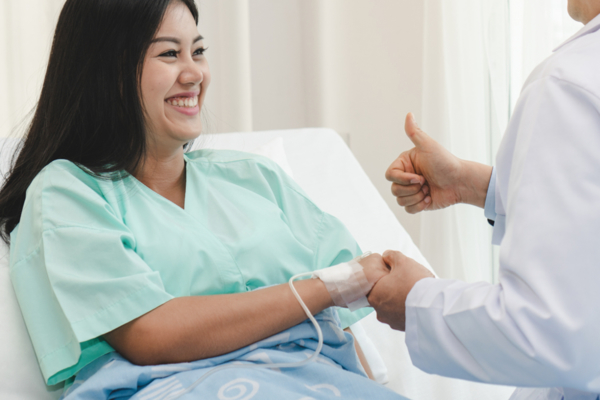
Your body goes into its postpartum state right after giving birth. It begins working to produce breastmilk and get you ready to recover from the effects of giving birth. You should be sure to allow yourself time to recover physically and mentally from the entire process.
Physical Recovery
The physical toll that pregnancy and birth have on the body is significant. If delivery occurred via C-section, the recovery process can be long as it is a major surgery. Women who have given birth vaginally can experience tears and bruising. There are a number of side effects that are unique to each mother who gives birth.
Surrogates benefit from having given birth before. They are able to more closely monitor their bodies for unexpected changes during their recovery period. Surrogacy offers the unique opportunity to recover without having to simultaneously take care of a newborn baby. If you are married or in a relationship, you can lean on your partner to help you in your recovery process. Family and friends can also fill this role.
Pregnancy is a journey that can leave scars. Stretch marks are extremely common among women, even those who have not given birth. Newer stretch marks appear darker and more pronounced, as they age they may fade in color and become less pronounced. Stretch marks do not go away, they simply become less noticeable. You may also be faced with C-section scars. Your body has housed and delivered new life, it is simply showing the evidence of that experience. The marks can be something to remind you of your treasured time and the gift of life you gave to a deserving family.
You may also experience swollen breasts that harden after a while of not being emptied. There is no way to prevent this, however, there are methods of reducing the pain through the use of painkillers.
Mental Recovery
Despite the common misconception, surrogate mothers do not typically go through the process of feeling as if they have given up their baby. They look at their experience and see that they have carried a child for another and see that as an exceptional gift. However, there is a need for a mental recovery after pregnancy and birth. Changes in your body after giving birth and fluctuating hormone levels can contribute to the onset of postpartum depression. You should be on the lookout for some of the symptoms of postpartum depression.
In Conclusion
Postpartum recovery can be a long and arduous process. It is important to allow yourself the time and space to recover from giving birth. You should not push yourself too hard or ignore your mental health. Simple Surrogacy cares about your health. As a surrogate, you get the opportunity to choose a getaway or retreat after giving birth, as a gift from us to you. You can also find support with any number of our staff, many of whom are experienced surrogates.
Body weight and Body Mass Index (BMI) play a significant role in a woman’s ability to conceive. Both underweight and overweight conditions can affect fertility, making it important to maintain a healthy weight when trying to become pregnant. This article…
In-Vitro Fertilization (IVF) has provided a path for many couples who face fertility challenges, helping them achieve the goal of having a child. A key component of this process, particularly for those concerned about genetic disorders, is Preimplantation Genetic Diagnosis…
Taking care of yourself is essential, especially when you're responsible for caring for your little ones. Self-care isn't just a luxury; it's a necessity that directly impacts your physical and mental well-being, allowing you to be the best parent you…